MS Thesis Defense, Tabina Navaid
Title: Exploring the Intersection of AI, Energy and Ethics in Low-and-Middle Income Countries: A Scoping Study
MS Thesis Defense: Tabina Navaid, MS Data Science Student, IBA-SMCS
Advisor: Dr. Faisal Iradat, Assistant Professor, IBA-SMCS
External Examiners: Dr. Faraz Haider (NED) | Dr. Umar Farooq (NED)
Date: February 10, 2026 at 03:00 PM
Venue: 2nd Floor, Conference Room, Tabba Academic Block [North Wing], IBA Karachi, Main Campus
Abstract
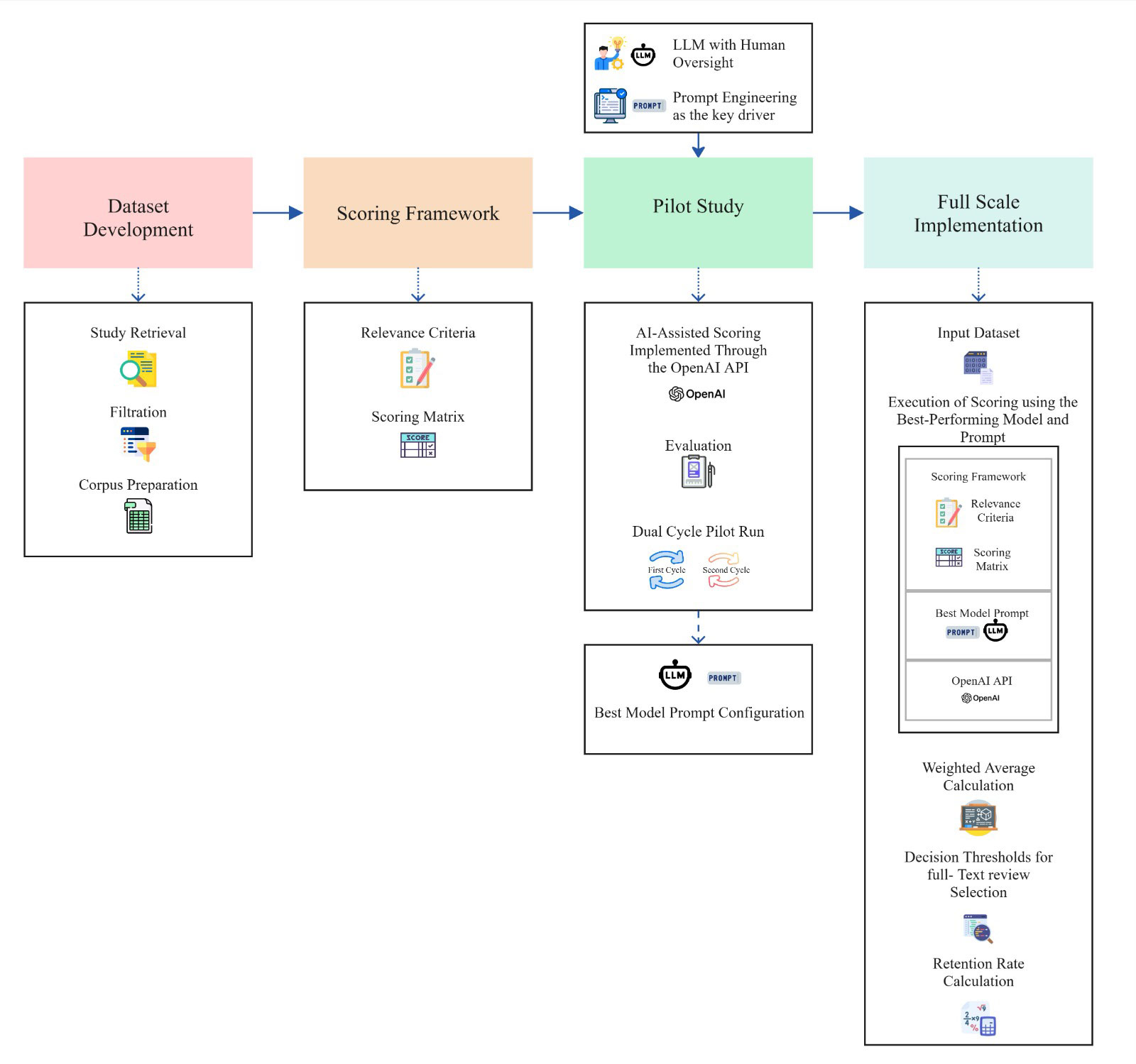
Energy poverty remains a persistent challenge faced by LMICs of the world where access to modern energy systems is limited. The advancement of AI is seen as a potential tool to improve the energy planning and management in LMICs. Despite this, the extent to which AI has been integrated in LMICs energy systems remains unclear, especially where data management practices and ethical considerations are also accounted for. The literature available that addresses these issues remains highly fragmented and dispersed which calls for a scoping review to map the breadth of the research. But conducting scoping review proposes its own set of challenges since it relies heavily on labour intensive manual screening and requires substantial time and effort. This thesis attempts to address both of interconnected challenges by developing an AI[1]assisted scoring framework to help screening and dealing with large volume of studies and thematic analysis of the resulting evidence base. An AI–human collaborative approach was developed where an initial corpus of 615 studies, 123 abstracts were first assessed by human reviewers and six GPT models combines with 3 prompt levels to benchmark relevance scores on three relevance criteria, AI integration, Data Management and Ethical considerations. A dual phase pilot study was conducted with the o3-mini model paired with Level 2 prompt achieving the highest alignment with human judgments (95%) was identified. This configuration was applied to the full dataset, yielding 80 candidate studies based on primary thresholds and override conditions, of which 64 studies were retained after human verification. A reflexive thematic analysis using the six-phase design process of the final 64 studies identified four key themes, indicating that AI deployment in LMIC energy systems remains largely research-centric, supported by adaptive but fragile data practices, and rarely guided by formal ethical frameworks. Overall, the findings suggest that AI[1]assisted screening, when combined with human oversight, may help scale scoping reviews in under-researched domains, while also highlighting important gaps in the responsible integration of AI within LMIC energy systems.
